
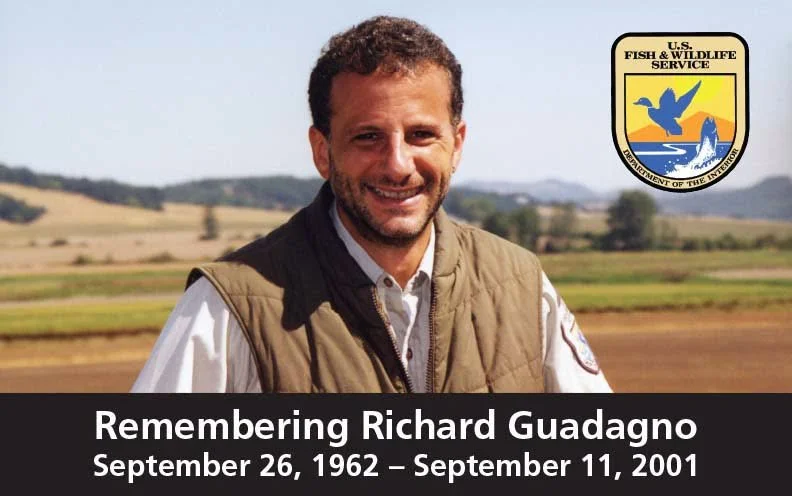
Rich Guadagno was a refuge manager, conservationist, law enforcement officer, musician and friend whose life was rooted in caring for wildlife, wild places and people.
One evening at Baskett Slough National Wildlife Refuge in Oregon, David Paullin called Richard J. “Rich” Guadagno with life-changing news: Rich had been selected to manage Humboldt Bay National Wildlife Refuge in California.
But thousands of Canada Geese were returning to their night roost, and the sound made it nearly impossible to talk. Rich moved into his truck so he could hear. Paullin asked him to go back outside and hold the phone toward the sky.
For nearly a minute, they simply listened.
Paullin understood why Rich had stayed at the refuge so late. He wanted to watch the geese return and see how they responded to the habitat work being done for them. That quiet moment says something essential about Rich. Conservation was not simply his career. It was how he moved through the world.
Twenty-five years after September 11, 2001, Rich is remembered across the National Wildlife Refuge System not only for how his life ended, but for how he lived: with curiosity, humility, courage and a deep commitment to wildlife and wild places.
A memorial for Rich Guadagno at Baskett Slough National Wildlife Refuge, OR | USFWS
A Life Rooted in the Natural World
A wildlife biologist, young Richard Guadagno is pictured with a bear cub | Diqui LaPenta
Born on September 26, 1962, Rich grew up in Ewing, New Jersey. His connection to the natural world began early. One summer, he cultivated 23 varieties of lettuce in his family’s yard. His interests ranged from gardening, botany and wildlife to geology, astronomy, photography and taxidermy.
Rich graduated from Rutgers University in 1984 with a degree in biology. He soon joined the U.S. Fish and Wildlife Service, beginning a 17-year career dedicated to conservation. His first USFWS position was as a temporary biologist at Great Swamp National Wildlife Refuge in New Jersey. His first permanent post was as a wildlife inspector in Philadelphia. He later worked at Prime Hook National Wildlife Refuge in Delaware, Supawna Meadows National Wildlife Refuge in New Jersey, and Baskett Slough and Ankeny National Wildlife Refuge in Oregon.
Tom McFadden remembers the day Rich first arrived at Great Swamp wanting to volunteer:
“I remember the day Rich came into the refuge headquarters wanting to volunteer in the early 80’s. We immediately hit it off and became good friends. Rich spent many nights at my house at the refuge. One in particular where we were waiting for an alarm to go off in one of the bluebird boxes as someone had stolen some of the young, so we set up an alarm, which was run by a radio transmitter. Of course the thief never came back, but that night we did not get any sleep! Rich was one of the hardest workers I had ever met. We would mow fields, service wood duck boxes, build bridges on our hiking trails and do many other refuge projects together. He wanted to get into hunting so I took him deer hunting and he got his first buck with me. Boy, was he excited. I’ve kept in touch with his sister and have exchanged many photos that I have found with her. It’s hard to believe he has been gone 25 years. I miss him a lot as many other people do as well. He was a great friend.”
In the early 1990s, Rich moved to Oregon, where he managed Baskett Slough and Ankeny National Wildlife Refuges. Anne Badgley, who served as the USFWS’s Regional Director in Portland, remembered presenting Rich with an award for his work there:
“As the Regional Director in Portland, I had the honor of awarding Rich for his outstanding work at Basket Slough and Ankeny National Wildlife Refuges in Oregon. The day of our visit, Rich took great joy in leading us on a tour of these refuges, highlighting accomplishments and discussing future plans. He was proud and humble when receiving the award and quick to give credit to others, personifying the best attributes of a public servant and an advocate for the natural areas that he loved. He is missed.”
Rich Guadagno with his beloved german shepherd, Raven
By 2000, Rich had become manager of Humboldt Bay National Wildlife Refuge in Northern California. He focused limited staff and funding on the restoration of Salmon Creek, which colleagues described as the heart of the refuge, while overseeing a major cleanup and construction of a new visitor center. He believed in welcoming the public into conservation and worked to build partnerships around a shared vision for the refuge.
Away from work, Rich studied the stars, grew orchids and bonsai, cooked, rode motorcycles, gardened and shared adventures with his German Shepherd, Raven. At his A-frame home near Eureka, hummingbirds visited the property and approximately 150 trees, each planted by Rich, surrounded the house. He owned eight guitars, played guitar and learned to build guitars himself.
Jan Taylor, who knew and worked with Rich for many years, remembered the many parts of the person behind the refuge manager:
“Rich was a wonderful kindhearted man whom I had the pleasure of knowing and working with for many years. When I heard he was on flight 93 my heart broke into a million pieces. He was coming home for his Grandmothers’ 100th birthday. He loved his family and friends and his wonderful German shepherd dogs. He loved playing music and eating Italian food and was so much fun to tease. Rich was someone you could always count on and took his role as a refuge manager to heart and with pride. He loved his work protecting wildlife and wild places. He hasn’t been forgotten and never will.”
One rare piece of Rich’s music, an instrumental titled “Children’s Dance”, was included in the USFWS’s Songs of the System collection. His family shared the recording so others could hear another part of the person they knew.
Listen to Rich’s song “Children’s Dance” in the Songs of the System collection:
September 11th, 2001
Rich was returning to California after celebrating his grandmother’s 100th birthday in New Jersey when United Airlines Flight 93 was hijacked on September 11th, 2001.
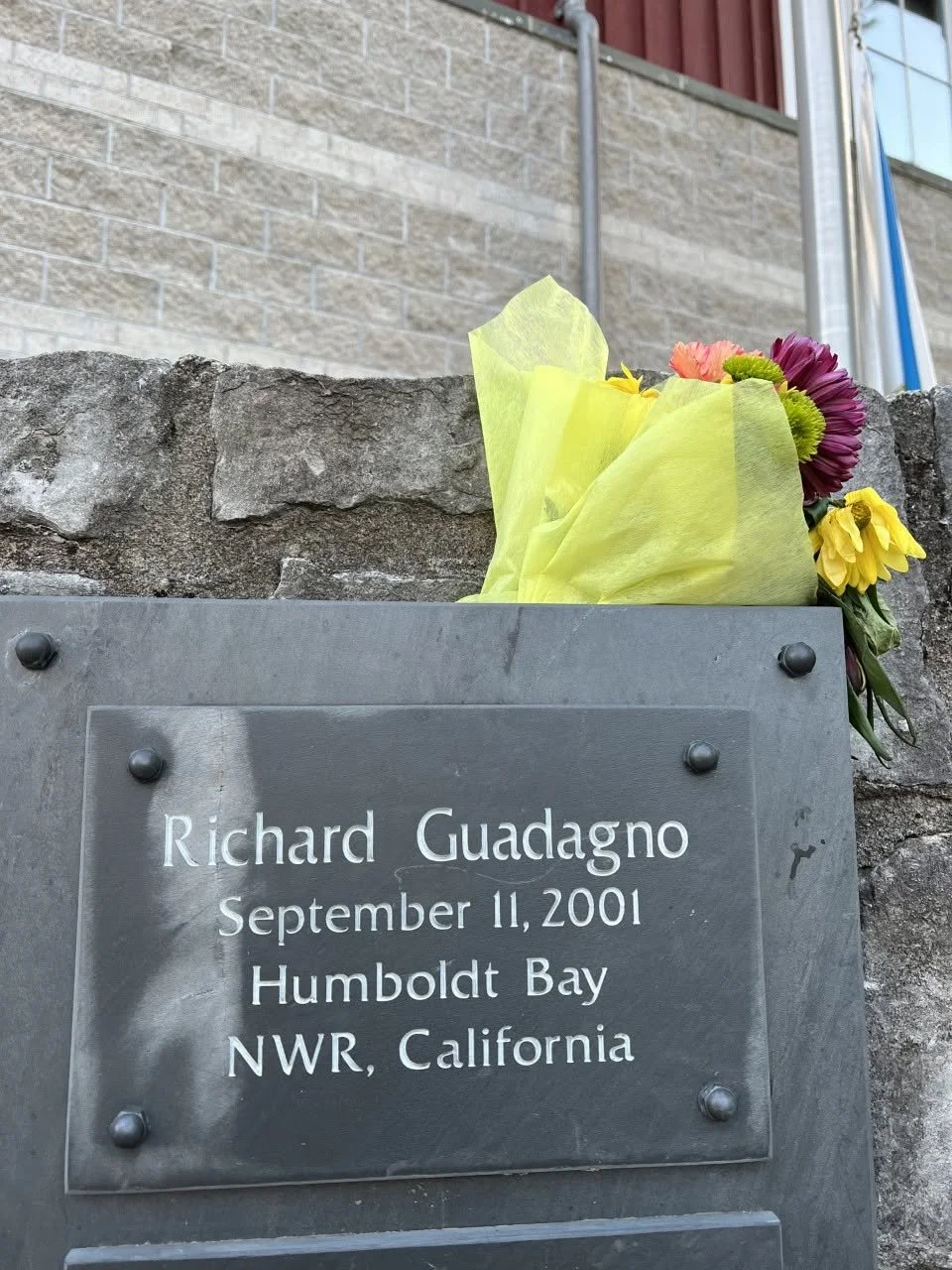
A tribute to Rich near the visitor center at Humboldt Bay National Wildlife Refuge, CA | USFWS
The precise role any one person played in the final struggle aboard Flight 93 is not fully known. What is known is that the passengers and crew made a collective decision to fight back, preventing the plane from reaching the hijackers’ intended target. Rich’s badge and credentials identifying him as a federally trained law enforcement officer were recovered at the crash site near the cockpit. He was the only federal law enforcement officer aboard any of the four hijacked flights that day and was posthumously awarded the U.S. Department of the Interior Valor Award.
Jim Hall, who served as Chief of Law Enforcement for the National Wildlife Refuge System, reflected on Rich’s place within a generation of refuge officers:
“Rich was a product of my generation of Refuge Officers. He was a wildlife biologist, a refuge manager and an officer with the U.S. Fish and Wildlife Service. We will never know exactly what role Rich played aboard Flight 93. He was the only federal officer aboard any of the four hijacked flights that day, and Flight 93 was the only one that did not reach its intended target. I believe Rich was a big part of why, alongside the passengers and crew who fought back.”
A Field of Honor
The rural Pennsylvania field where Flight 93 came down, near Shanksville in Somerset County, is now preserved as Flight 93 National Memorial. The memorial protects the crash site and the final resting place of the 40 passengers and crew members.
The tribute overlooking the field at Flight 93 National Memorial | NPS
The Memorial Plaza follows the quarter-mile northern boundary of the crash site. At its end, the Wall of Names is formed by 40 polished white marble stones, each bearing the name of a passenger or crew member. A 17.5-ton sandstone boulder marks the impact site beyond the public boundary, and a visible gap remains in the Eastern Hemlock grove where the plane struck the trees. That area is closed to the public, with access reserved for the families of those who died.
The surrounding landscape has become part of the memorial. Forty Memorial Groves, formed by 2,000 trees across approximately 30 acres, honor the passengers and crew. Near the entrance, the 93-foot Tower of Voices holds 40 wind chimes, each with a distinct voice. Together they create a living memorial in sound.
A Legacy Written Across the Landscape
Rich’s conservation legacy remains visible across the country. At Humboldt Bay NWR, the headquarters and visitor center he helped plan and build was named in his honor by Congress. A memorial stone there recognizes his service and sacrifice.
At Baskett Slough NWR, the 1.72-mile Rich Guadagno Memorial Trail crosses restored rare native oak savanna and upland prairie. In 2007, it became the 1,000th trail added to the National Recreation Trails System. An observation platform overlooking the refuge also bears his name.
Native oak savanna habitat at Baskett Slough National Wildlife Refuge near the Rich Guadagno Memorial Loop Trail | USFWS
At Great Swamp NWR, where Rich began his USFWS career, a pavilion and memorial plaque honor him. The places at the beginning and end of his refuge career remain connected by his name and by the conservation work he loved.
Across U.S. Route 30 from Flight 93 National Memorial, another living tribute carries Rich’s name. The Pennsylvania Game Commission created the Richard J. Guadagno Habitat Area and Guadagno Trail on State Game Lands 93 to honor his lifelong commitment to nature, wildlife and conservation. The approximately 3.5-mile loop winds through wildflower-filled meadows, a small wetland and the rolling hills of the Laurel Highlands. It gives visitors a place not only to remember Rich, but to walk through the kinds of vibrant landscapes he worked to conserve.
At the State Game Lands 93 dedication ceremony in 2010, Hall presented an American flag to Rich’s father, Jerry. Hall later recalled Jerry telling him that the ceremony felt different because those gathered from the USFWS were Rich’s “co-workers and friends, his working family.”
At the National Conservation Training Center in West Virginia, Rich is honored at the Fallen Comrades Memorial, which pays tribute to U.S. Fish and Wildlife Service employees who died in the line of duty. The U.S. Fish and Wildlife Service Museum at NCTC has also helped preserve and share his story.
This year, the USFWS Museum guest-curated a special Interior Museum exhibit featuring personal items and tributes to Rich. The exhibit is on view at the Stewart Lee Udall Department of the Interior Building in Washington, D.C., through December 31st, 2026.
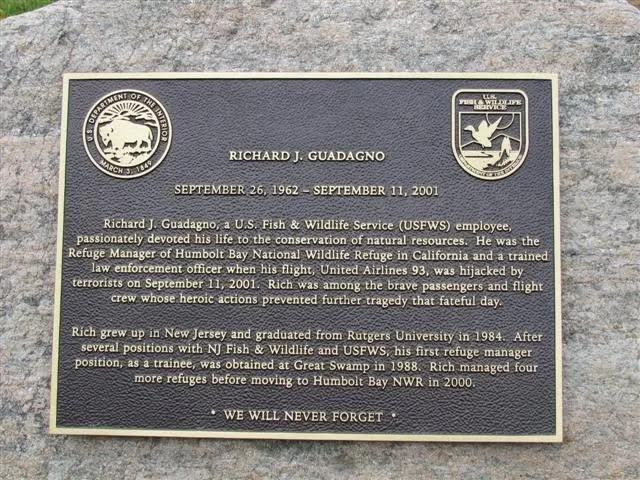
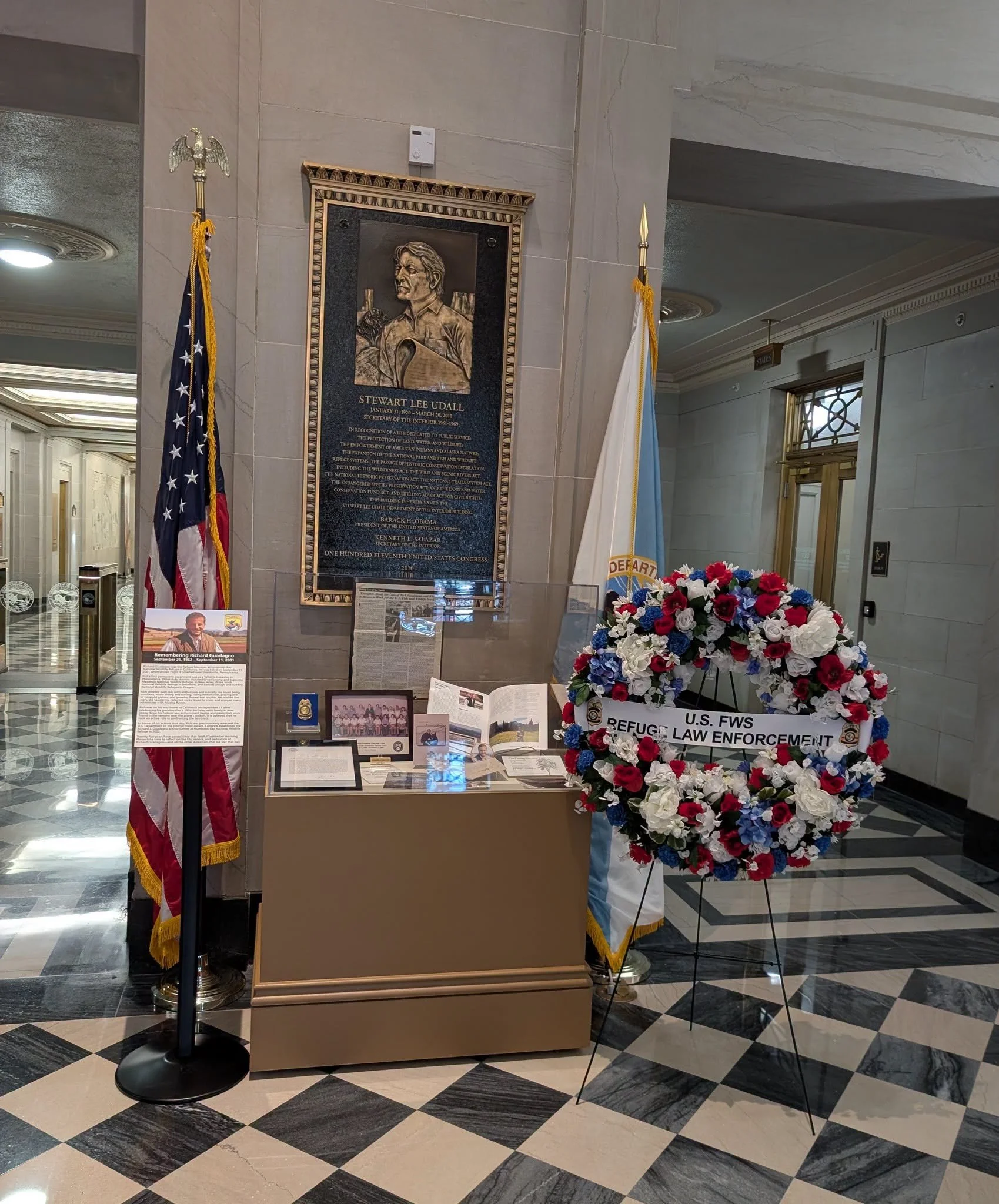
At the National September 11th Memorial in New York City, Rich’s name appears at the South Pool on Panel S-67, alongside the other passengers and crew members of Flight 93.
His family extended that living legacy in 2012 by establishing the Richard Guadagno Fellowship and Scholarship Program. Administered through the Student Conservation Association, it has provided students with hands-on field biology experience while supporting wildlife habitat work in Humboldt County.
Kathy Woodward, a board member of the Friends of Great Swamp NWR, reflected on how those tributes connect the landscapes of Rich’s life:
“Rich’s influence stretches across the breadth of the United States - from his roots in New Jersey and his first station with the Refuge System at the Great Swamp NWR where we have a pavillion named in his honor, to his last duty station, the Humbolt Bay NWR in California whose visitor center bears his name, to the field in Pennsylvania where his watch ended, his valor, honor and dedication to the Refuge System and the United States will never be forgotten - nor taken for granted. We honored his memory in this video a few years ago that we hope people will watch to know a little more about this amazing and selfless member of the Refuge System family.”
Watch the remembrance video shared by Kathy:
Remembering Rich
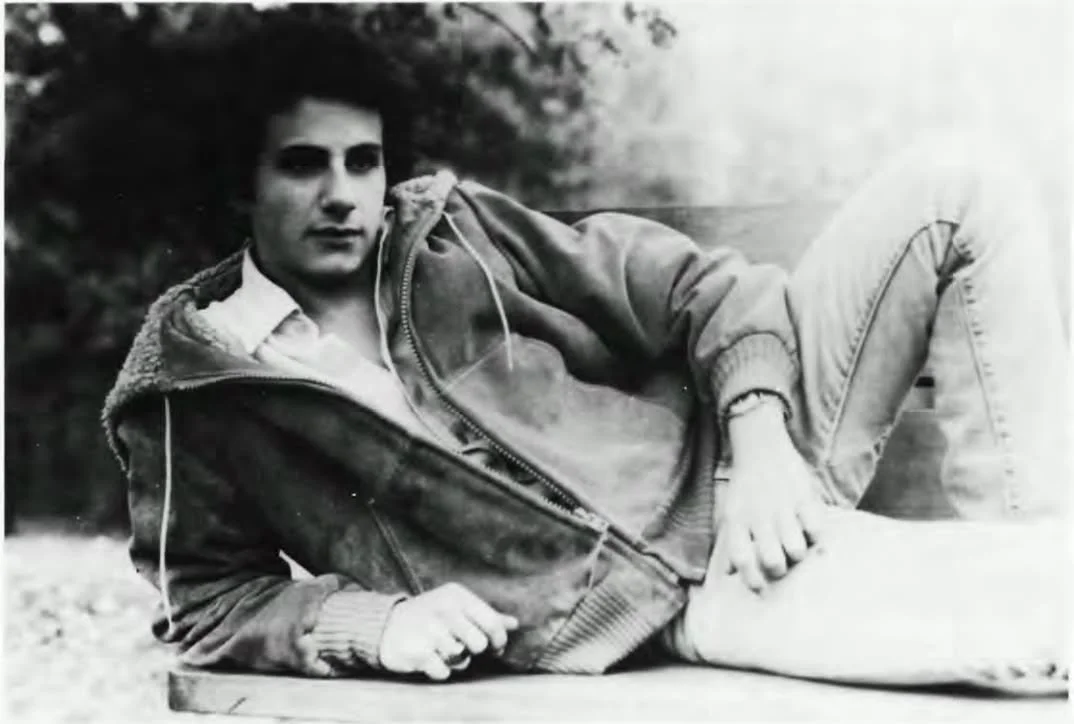
The monuments, plaques, trails and buildings bearing Rich’s name ensure that his service will be remembered. Yet some of the most meaningful memorials are quieter: Canada Geese returning to a refuge at dusk, a restored stream moving through protected habitat, a student beginning a conservation career, or a piece of music being heard again.
Twenty-five years later, we remember Rich as a member of the National Wildlife Refuge System’s working family: a refuge manager, biologist, law enforcement officer, naturalist, musician and friend. His life continues to inspire those who care for America’s wildlife and wild places.
As Jan Taylor said, “He hasn’t been forgotten and never will.”
If you knew Rich or worked alongside him, we invite you to share your own recollections so that more people can know the person he was and the legacy he left.
For a more personal remembrance of Rich, his sister Lori shares her story in this NPR and Arizona Public Media feature.
