
A bipartisan group of seven former U.S. Fish and Wildlife Service and NOAA Fisheries leaders is urging the administration to reverse a new rule that weakens how the Endangered Species Act protects wildlife from habitat destruction.
In a letter to Secretary of the Interior Doug Burgum and Secretary of Commerce Howard Lutnick, the former officials call for the administration to withdraw its rescission of the longstanding regulatory definition of “harm.” The rule is scheduled to take effect September 14th.
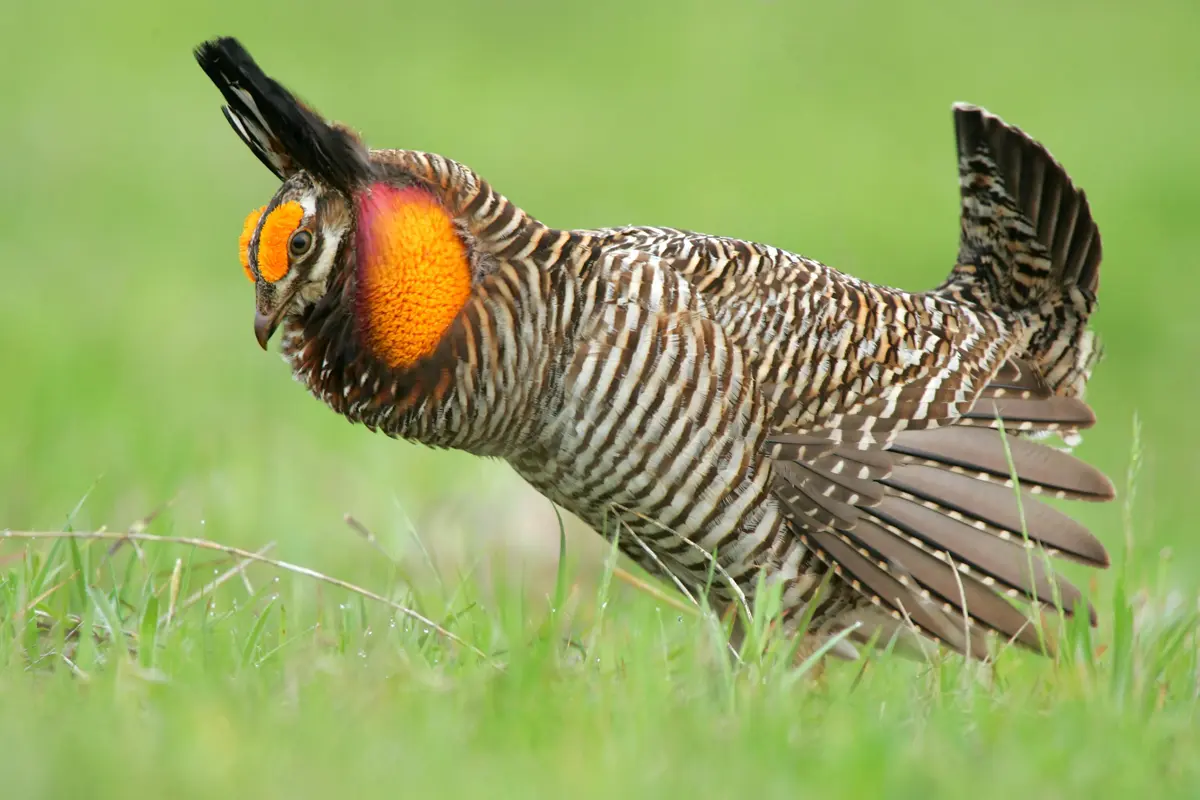
Atwater Prairie Chicken | USFWS
For decades, that definition recognized that significant habitat modification or degradation can harm protected wildlife when it kills or injures them by disrupting essential behaviors such as breeding, feeding, sheltering, and migration. The new rule removes that definition from federal regulations and relies on a much narrower interpretation of the law.
The former leaders, who served under presidents of both parties, warn that this change breaks with decades of science, practice, and precedent. Their message is rooted in both science and common sense: wildlife does not disappear only when an animal is directly killed. Wildlife also disappears when the places it needs to feed, migrate, nest, and raise its young are destroyed.
As the letter puts it,
“Without a place to live, survival becomes nearly impossible.”
That warning goes to the heart of why the National Wildlife Refuge System matters. More than 500 threatened and endangered species are found on or depend on national wildlife refuges. These lands and waters protect nesting grounds, migration corridors, food sources, shelter, and the conditions wildlife need to recover.
But refuge boundaries are not walls. Wildlife moves across landscapes, watersheds, coastlines, and property lines. What happens to habitat beyond a refuge boundary can determine whether the species protected within it survive and recover.
The National Wildlife Refuge Association shares the former leaders’ concern. Protecting wildlife means protecting habitat. We cannot separate a species from the places it needs to survive.
