
Steve Huhnke Named Recipient Of The 2026 Refuge Employee Of The Year Award
For Immediate Release October 20th, 2026
Contact: Eden Taylor etaylor@refugeassociation.org
Klamath Basin Equipment Supervisor Honored For Innovative Water Management & Habitat Restoration
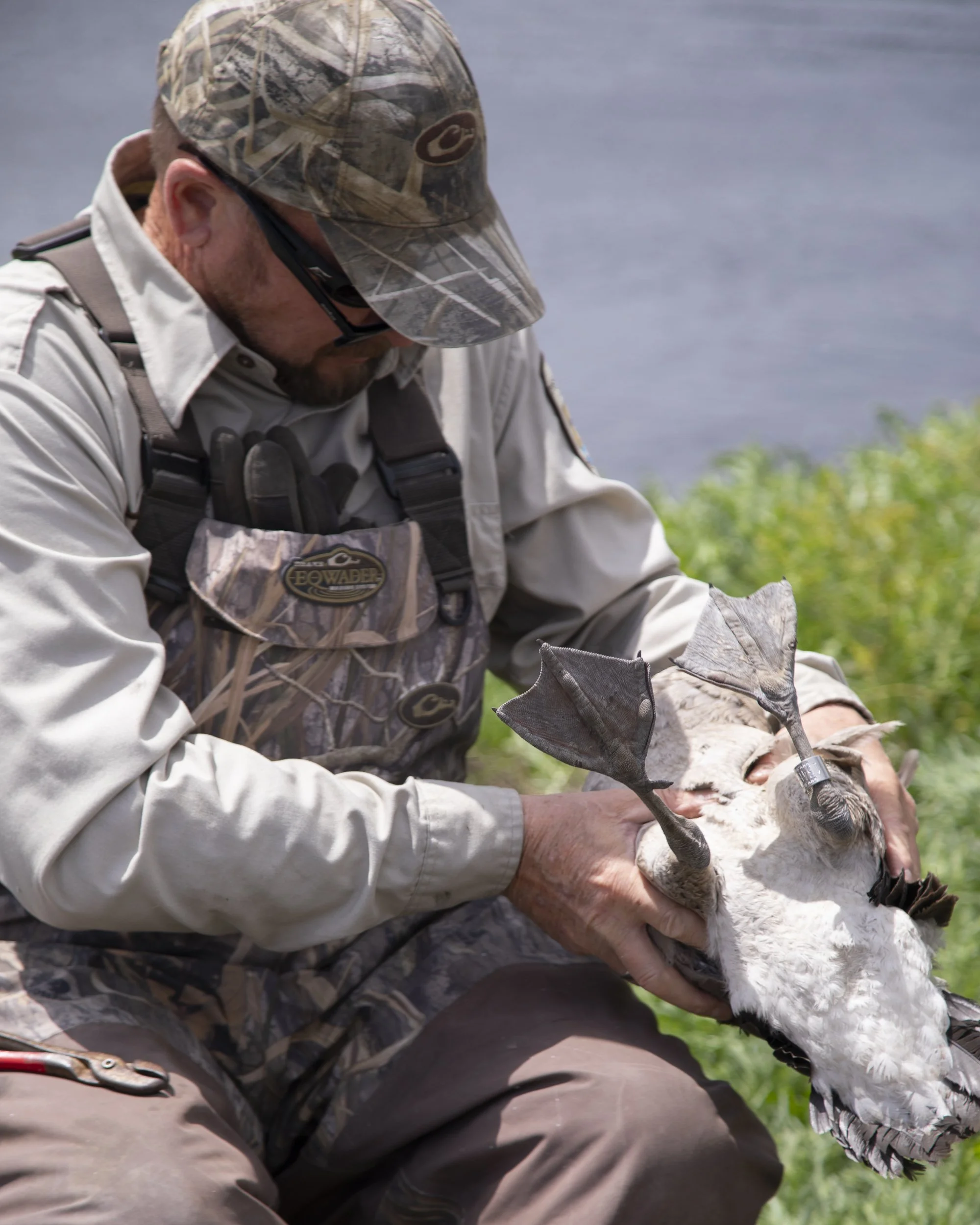
Steve Huhnke banding a goose at the Klamath Basin National Wildlife Refuge Complex, CA/OR | USFWS
TULELAKE, CA - The National Wildlife Refuge Association has named Steve Huhnke, engineering equipment supervisor at the Klamath Basin National Wildlife Refuge Complex, the recipient of the 2026 Refuge Employee of the Year Award. Huhnke is recognized for his creative approach to water management, extensive habitat restoration work, and leadership of the maintenance crew that carries out conservation projects across the complex.
The complex includes six national wildlife refuges in California and Oregon, protecting remaining wetlands in a landscape where water availability shapes nearly every management decision. These habitats are important to migratory waterbirds traveling along the Pacific Flyway. Maintaining them requires crews to adapt to drought, flooding, damaged infrastructure, and a large network of neighboring landowners and water users.
Huhnke brings construction experience, technical knowledge, and an understanding of wetland operations to those challenges. His work includes moving water, maintaining roads and facilities, restoring habitat, managing equipment, and finding ways to complete projects with the people and resources available.
“Steve understands what it takes to make a wetland work, right down to where the water needs to go and how to keep it there for the birds,” said Desirée Sorenson-Groves, President & CEO of the National Wildlife Refuge Association. “He’s used that knowledge to bring habitat back after years of drought and give young birds a chance to grow. And he does it while leading a crew and keeping the refuges running. These are the people who make conservation happen every day, and Steve has more than earned this recognition.”
Returning Water To Wetlands

A rainbow over an irrigation wheel line at the Klamath Basin National Wildlife Refuge Complex, CA/OR | USFWS
After Lower Klamath National Wildlife Refuge had been largely dry for more than four years, winter and spring precipitation created an opportunity to refill its wetlands. The water, however, was arriving through an alternative route in the refuge's delivery system that presented challenges. Huhnke adapted drainage infrastructure to move water into the wetlands, effectively using parts of the system in reverse.
In less than two months, approximately 35,000 acres were flooded, restoring spring migration habitat used by hundreds of thousands of birds. Visitors returned to the refuge's tour loop as wetlands that had been dry again supported wildlife. The approach also created short-term water storage that helped neighboring agricultural producers offset irrigation demand.
The result depended on his deep understanding of how the refuge's canals, water control structures, and wetland units could work together under unusual conditions. Huhnke translated that knowledge into a practical solution that benefited wildlife while helping meet needs beyond the refuge boundary.
Sustaining Habitat For Young Waterbirds
Huhnke applied the same careful problem solving when a limited spring water delivery attracted nesting waterfowl but no supplemental water was available to sustain their habitat. As wetlands began to dry, thousands of young birds faced the prospect of losing the water they needed before they could fly.
He evaluated where water remained, where infrastructure could hold it temporarily, and where it could be recovered and reused. He then developed a plan to gradually draw water out of one wetland and move it into another, maintaining areas where broods could feed and grow as they moved toward the remaining flooded habitat.
Refuge biologists documented the response through brood counts and later banded more than 5,000 young birds in the habitat maintained through that effort. His approach is credited with helping produce the refuge's most successful nesting season since 2019.
Applying Technical Skills Across The Refuge Complex
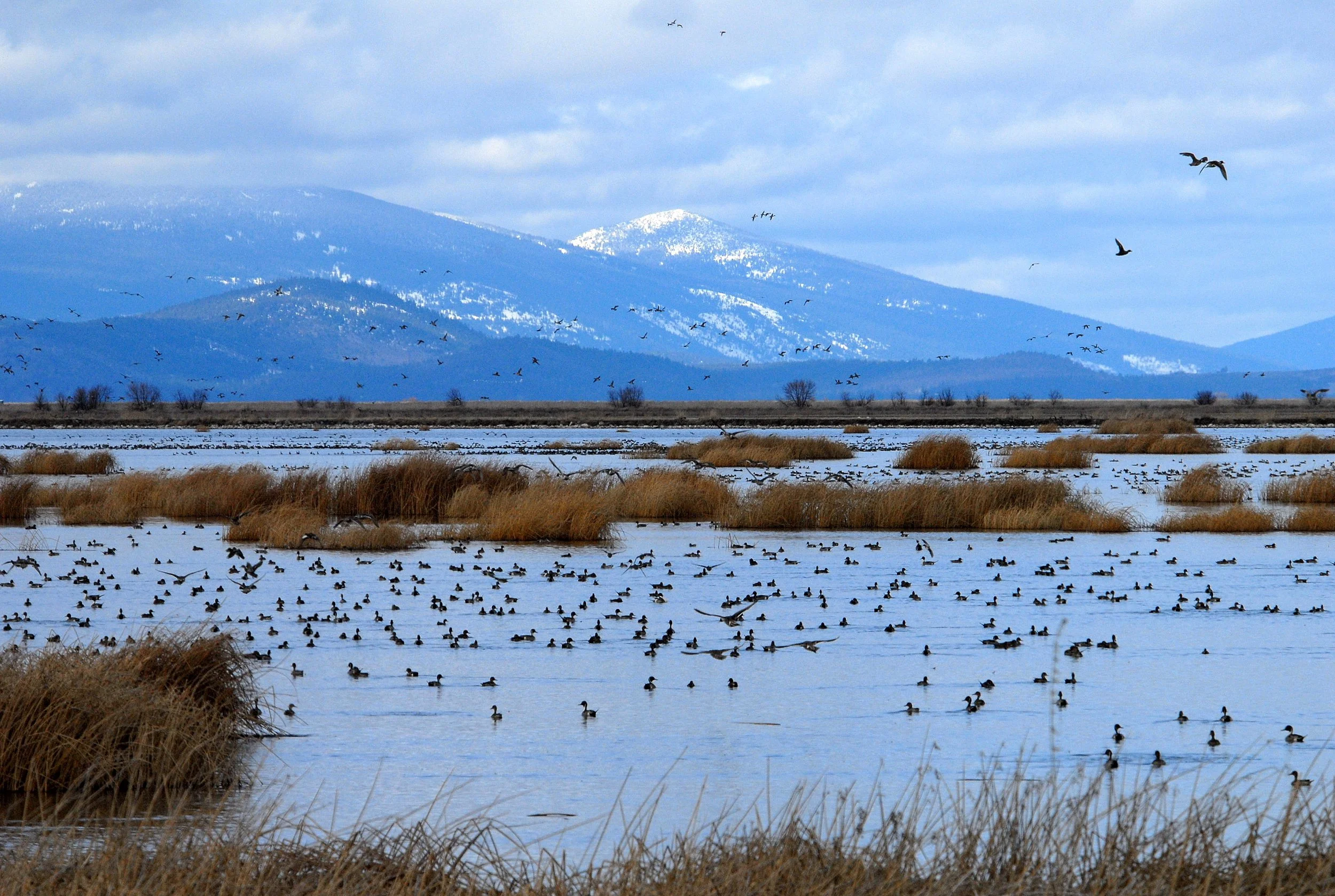
Landscape at Lower Klamath National Wildlife Refuge, CA | Dave Menke/USFWS
Huhnke's contributions include restoring more than six miles of river channel at Tule Lake National Wildlife Refuge and helping carry out river restoration at Klamath Marsh National Wildlife Refuge. He has developed rearing ponds for endangered fish, rebuilt degraded levees, reshaped wetland impoundments, and replaced most water control structures at Lower Klamath.
He carries out these projects while supervising employees, maintaining a fleet of heavy equipment, administering contracts, managing construction projects, and keeping refuge facilities and roads functioning. His work can shift from operating a long-reach excavator, to coordinating a fuel contract, planning restoration with biologists, or teaching a new employee how to operate a water control structure.
Keeping much of this work within the refuge maintenance program also helps stretch conservation funding. It is estimated that Huhnke and his crew save the complex between $750,000 and $1 million in project costs annually by completing work that would otherwise require outside contractors. When contracting is needed, Huhnke oversees projects to help ensure the work meets specifications.
Working Alongside Refuge Neighbors
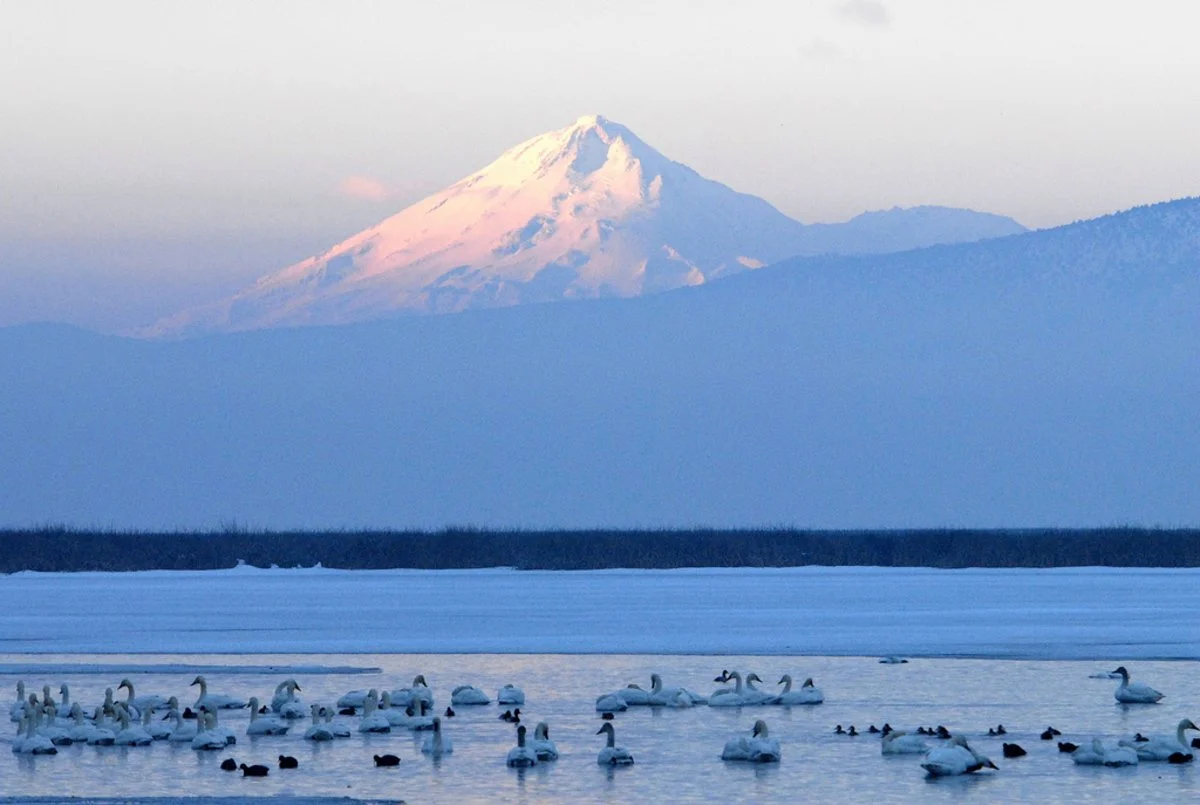
Tundra Swans on the water with Mount Shasta in the background at Tule Lake National Wildlife Refuge, CA | USFWS
Flooding in spring 2025 damaged canals, roads, levees, and water control structures at Tule Lake and Lower Klamath. Huhnke mobilized his crew and equipment to assist wherever repairs were needed, including work with Bureau of Reclamation staff, the Tule Lake Irrigation District, and the Klamath Drainage District.
Those efforts included canal and levee repairs, maximizing delivery of drainage water, and restoring roads and damaged wetland infrastructure. His relationships with neighboring organizations support the sharing of equipment, staff, and materials, helping partners respond to urgent needs across administrative boundaries.
A Commitment That Began With Childhood Refuge Visits
Huhnke first visited the Klamath Basin on waterfowl hunting trips with his father. After a career in private industry in the Bay Area, he moved to the Basin and began volunteering at the refuges. The skills he brought to that service eventually led to a career with the U.S. Fish and Wildlife Service.
His connection to the refuges remains visible in his work with visitors. He makes time to talk with hunters, birders, and photographers, share information about the refuge, and hear their experiences. His attention to public access and his willingness to explain management decisions help connect the technical work of conservation with the people who use and care about these lands.
The Refuge Employee of the Year award recognizes outstanding service by refuge employees whose contributions exceed the expectations of their position. Huhnke is one of four recipients of the Refuge Association's 2026 National Wildlife Refuge Awards.
Learn more about the National Wildlife Refuge Awards at www.refugeassociation.org/awards.
###
The National Wildlife Refuge Awards, presented annually by the National Wildlife Refuge Association since 1994, honor the exceptional contributions of volunteers, professionals, and partners who strengthen the National Wildlife Refuge System. The awards celebrate the people whose passion and dedication protect wildlife, restore ecosystems, and connect communities to the natural world.
The National Wildlife Refuge System is the largest network of public lands and waters in the world dedicated to wildlife conservation, encompassing more than 570 refuges and more than 850 million acres. Managed by the U.S. Fish and Wildlife Service, refuges provide critical habitat for thousands of species and offer opportunities for Americans to experience nature through hiking, hunting, birding, photography, and education.
As the only nonprofit solely dedicated to supporting the National Wildlife Refuge System, the National Wildlife Refuge Association protects, promotes, and enhances America’s wildlife heritage through strategic programs that serve the Refuge System and wildlife beyond its boundaries. The organization addresses Refuge System funding, management, and strategic growth, while also promoting programs that maximize the system’s conservation impact.
