
Brian Benedict Named Recipient Of The 2026 Paul Kroegel Award For Refuge Manager Of The Year
For Immediate Release October 20th, 2026
Contact: Eden Taylor etaylor@refugeassociation.org
Maine Coastal Islands Refuge Manager Honored For Decades Of Seabird Conservation & Leadership That Supports The People Doing The Work
ROCKLAND, ME - The National Wildlife Refuge Association has named Brian Benedict, manager of Maine Coastal Islands National Wildlife Refuge, the recipient of the 2026 Paul Kroegel Award - Refuge Manager of the Year. Benedict is being recognized for decades of work protecting seabird nesting islands, advancing conservation research, and building the partnerships that sustain refuge operations along Maine’s coast.
Brian Benedict with Manx shearwater chick | USFWS
Benedict joined the U.S. Fish and Wildlife Service in 1982 and has served at Maine Coastal Islands National Wildlife Refuge since 1992. He became refuge manager in 2017. The refuge spans approximately 250 miles of coastline, and its 2025 highlights report documents more than 42,000 nesting seabirds across 76 islands.
For species such as the Atlantic Puffin and Arctic Tern, these islands provide the habitat needed to nest and raise young. Protecting that habitat requires work far beyond the refuge's Rockland office. Field crews contend with cold water, weather, and the logistics of moving people and supplies to nesting islands, some more than 20 miles offshore. Benedict's leadership has helped sustain that work while connecting it to research, land protection, and public understanding.
“Brian knows that protecting seabirds starts with protecting the places they need, and he has spent decades making sure those islands have a future,” said Desirée Sorenson-Groves, President & CEO of the National Wildlife Refuge Association. “He’s built the partnerships that make this work possible, and he’s right there in the boat helping his staff get it done. That combination of persistence and care for people is what makes a great refuge manager. His work will benefit Maine’s seabirds long after this award.”
Protecting Nesting Islands For The Long Term
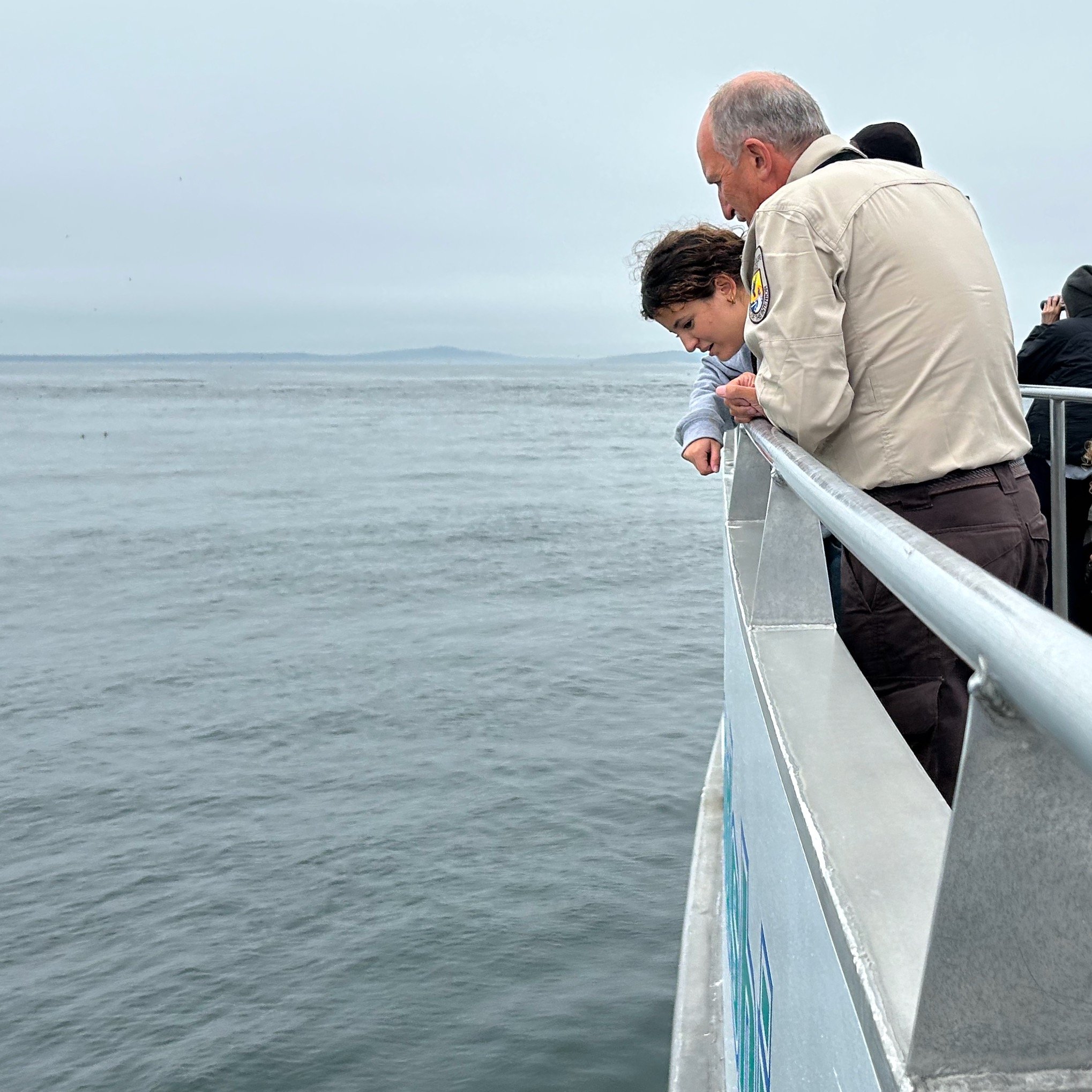
Brian Benedict and a visitor observing coastal waters from a boat in Maine | Friends of Maine Coastal Islands
Working with conservation partners, Benedict helped evaluate 4,500 islands to determine which supported threatened and endangered species, significant seabird populations, or high biodiversity. That effort identified 87 newly designated nationally significant islands as priorities for acquisition, helping focus the refuge's land protection program on places with exceptional conservation value.
His partnership with Maine Coast Heritage Trust has been central to securing those places. The trust can acquire priority islands while Benedict works with regional U.S. Fish and Wildlife Service staff to secure federal acquisition funding. The collaboration has helped the refuge acquire more than 50 islands over the past 25 years, often through efforts that require years of negotiation and coordination with landowners.
Benedict has also developed cooperative agreements with the National Audubon Society to hire seasonal technicians and jointly manage three seabird restoration projects. These partnerships make fieldwork possible where refuge staffing and resources alone would be insufficient.
“It has been an honor and joy to have worked with Brian over the years. His unwavering dedication to conservation, public service, and people has left a lasting and meaningful impact,” said Wendi Weber, Board Member of the National Wildlife Refuge Association. “Brian is an extraordinary biologist whose contributions to safeguarding our natural world are both numerous and enduring. Brian embodies leadership through his compassion, humility, and character, and his dedication to collaborative partnerships has yielded numerous achievements that elevate the mission of the Service and improve the world we share.”
Restoring Habitat & Advancing Seabird Research
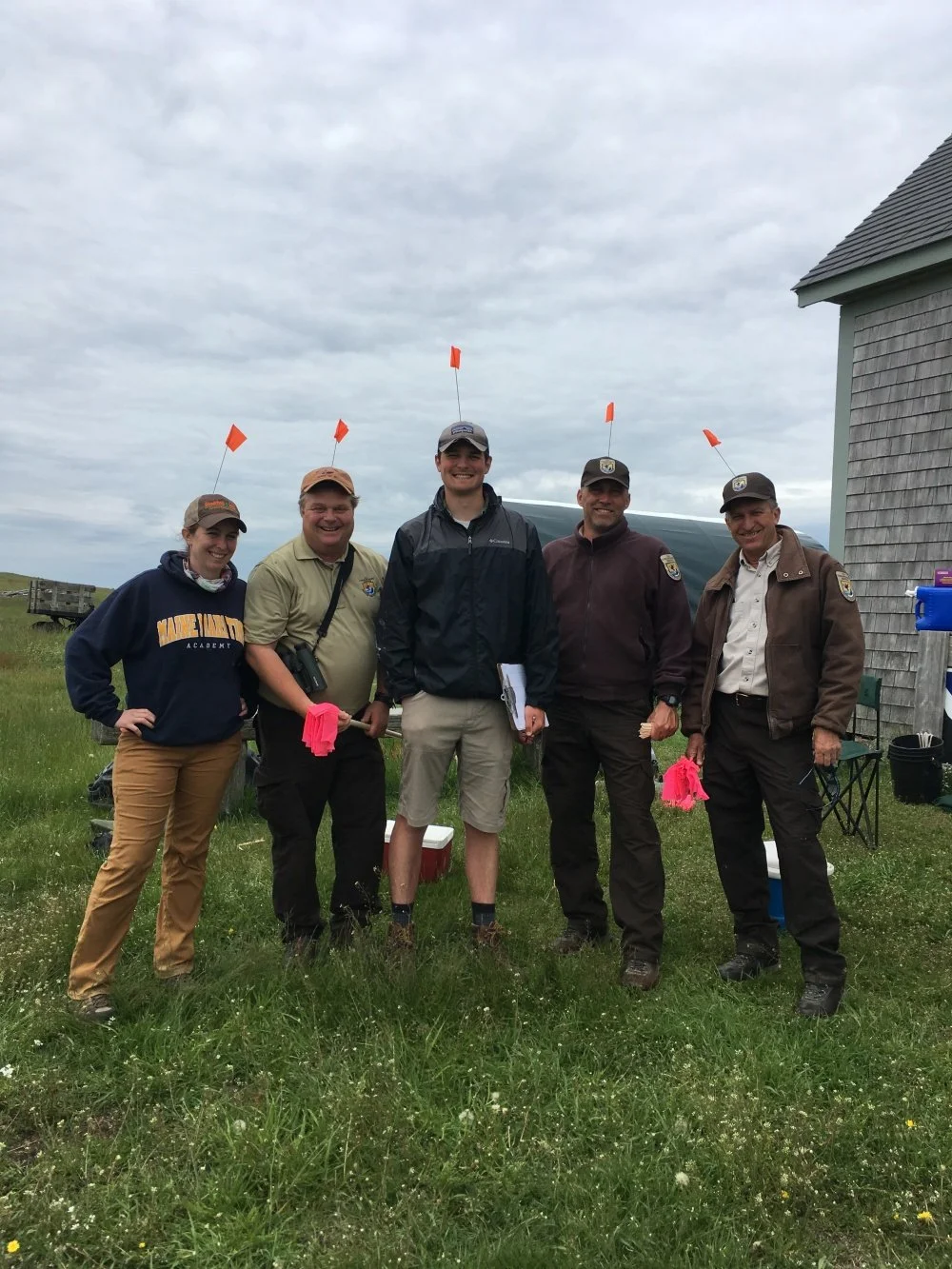
The 2019 seabird census crew on Metinic Island at Maine Coastal Islands National Wildlife Refuge, ME | Friends of Maine Coastal Islands
Benedict supports a range of management techniques suited to the needs of nesting seabirds, including prescribed fire, seasonal sheep grazing, mowing, placement of sand and gravel, and artificial nesting burrows. Applying these techniques on remote islands requires staff to adapt to weather, sea conditions, and the timing of the nesting season. He has also supported early detection and rapid response to invasive plants that threaten island habitats.
In 2025, refuge field stations reported a record 1,705 Common Tern pairs on Ship Island, a record 1,341 combined Common and Arctic Tern nests on Metinic Island, and a record 113 active Razorbill burrows on Seal Island. That year’s work also included Arctic Tern migration research and removal of invasive Multiflora Rose on Ship and Metinic Islands. Staff also began restoring a newly acquired cabin on Metinic Island for use as a field station supporting seabird research.
Research supported under Benedict's leadership has helped identify seabird foraging areas and migratory pathways. Refuge tracking data informed federal consultations on potential offshore wind development in the Gulf of Maine, bringing information about breeding colonies and important feeding areas into decisions beyond refuge boundaries.
A partnership with Gettysburg College has also brought undergraduate students into the refuge's seabird field program. Students join crews on Petit Manan Island and conduct independent research on seabird diets, foraging behavior, and responses to changing conditions. The collaboration has supported nearly 20 students and five honors theses, providing experience that connects conservation research with work in the field.
“Through Brian’s leadership in managing and restoring habitat for nesting seabirds, populations of several species have expanded,” said Graham Taylor, retired Refuge Supervisor. “One species, the Common Murre, returned to nest for the first time in over 100 years.”
Leadership Extending Into The Atlantic Ocean
From 2017 to 2020, Benedict served as acting superintendent of the Northeast Canyons and Seamounts Marine National Monument while continuing his responsibilities at Maine Coastal Islands. He helped establish management relationships for the monument and coordinated with National Oceanic and Atmospheric Administration (NOAA), researchers, aquariums, and conservation organizations working to understand and protect its marine habitats.
His work included coordinating marine mammal studies, deep-sea coral research, and bird surveys, as well as contributing to management planning and public interpretation. He worked with NOAA teams during Okeanos Explorer expeditions and helped develop accurate conservation and management messages for livestreamed dives. He also assisted with monument exhibits at Mystic Aquarium, giving people a way to learn about marine ecosystems far offshore.
Supporting The People Who Carry Out Conservation

Atlantic Puffins gathered on a rocky nesting island at Maine Coastal Islands National Wildlife Refuge, ME | USFWS
Benedict works alongside his staff, operating boats, transporting supplies, and assisting with biological surveys. He encourages training and professional growth while supporting staff through demanding field seasons. He is described as a manager whose steady approach, optimism, and willingness to help have earned the trust of the people working with him.
He has also built a close working relationship with Friends of Maine Coastal Islands National Wildlife Refuge. The Friends financially support 60 percent of the refuge's seasonal seabird technicians, helping sustain the biological program. At the Rockland visitor center, Benedict has coordinated exhibits, volunteers, and outreach that explain the work taking place on islands most visitors will never see firsthand.
Named for Paul Kroegel, the first manager of Pelican Island, the nation's first national wildlife refuge, the award recognizes outstanding accomplishments in refuge protection and management. Benedict is one of four recipients of the Refuge Association's 2026 National Wildlife Refuge Awards.
Learn more about the National Wildlife Refuge Awards at www.refugeassociation.org/awards.
###
The National Wildlife Refuge Awards, presented annually by the National Wildlife Refuge Association since 1994, honor the exceptional contributions of volunteers, professionals, and partners who strengthen the National Wildlife Refuge System. The awards celebrate the people whose passion and dedication protect wildlife, restore ecosystems, and connect communities to the natural world.
The National Wildlife Refuge System is the largest network of public lands and waters in the world dedicated to wildlife conservation, encompassing more than 570 refuges and more than 850 million acres. Managed by the U.S. Fish and Wildlife Service, refuges provide critical habitat for thousands of species and offer opportunities for Americans to experience nature through hiking, hunting, birding, photography, and education.
As the only nonprofit solely dedicated to supporting the National Wildlife Refuge System, the National Wildlife Refuge Association protects, promotes, and enhances America’s wildlife heritage through strategic programs that serve the Refuge System and wildlife beyond its boundaries. The organization addresses Refuge System funding, management, and strategic growth, while also promoting programs that maximize the system’s conservation impact.
